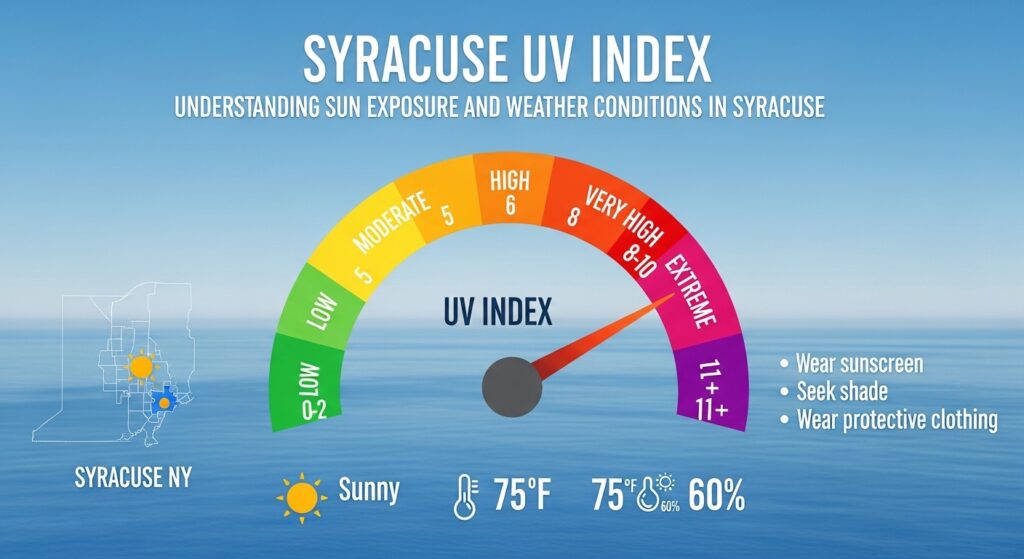
Weather conditions influence daily life in many ways, and one important factor people often overlook is the ultraviolet radiation level in the atmosphere. The syracuse uv index measures the intensity of ultraviolet rays reaching the ground in the Syracuse region. This index helps residents and visitors understand the potential impact of sun exposure during different times of the day and throughout the year. By monitoring the syracuse uv index, individuals can make informed decisions about outdoor activities, skin protection, and overall health. Understanding this environmental indicator is valuable for anyone who spends time outside and wants to remain aware of changing weather conditions.
What the UV Index Represents
The ultraviolet index is a scientific measurement used to estimate the strength of ultraviolet radiation from the sun. In the context of the syracuse uv index, this measurement helps people understand how intense the sun’s rays are on a given day. The index typically ranges from low to extreme levels depending on atmospheric conditions. Higher values indicate stronger ultraviolet radiation, which increases the likelihood of skin damage after prolonged exposure. By tracking the syracuse uv index, weather experts provide guidance that helps individuals take preventive steps when spending time outdoors under direct sunlight.
How Weather Conditions Influence UV Levels
Weather patterns play an important role in determining the syracuse uv index on any given day. Factors such as cloud coverage, air quality, and seasonal sunlight affect how much ultraviolet radiation reaches the surface. During clear summer days, the index usually rises because sunlight travels through the atmosphere with fewer obstacles. Conversely, dense cloud layers can reduce ultraviolet intensity, although some radiation may still pass through. Understanding how these environmental elements interact helps explain why the syracuse uv index changes throughout the day and across different seasons within the region’s climate.
Seasonal Changes in Syracuse UV Exposure
Seasonal variation significantly influences ultraviolet radiation levels in Syracuse. During the summer months, longer daylight hours and a higher sun position often lead to stronger readings on the syracuse uv index. This means individuals spending time outdoors may face increased exposure to ultraviolet rays. In contrast, winter months generally produce lower UV levels due to shorter days and the sun’s lower position in the sky. However, reflections from snow can still increase exposure under certain conditions. Observing seasonal patterns in the syracuse uv index helps residents better prepare for outdoor activities throughout the year.
Health Awareness and Sun Safety
Monitoring the syracuse uv index is closely connected to maintaining good health during outdoor activities. Ultraviolet radiation can affect skin and eye health when exposure occurs without proper protection. When the index rises to moderate or high levels, protective measures such as wearing hats, sunglasses, and sunscreen become more important. Individuals who understand the syracuse uv index can adjust their schedules to avoid peak sunlight hours when ultraviolet intensity is strongest. This awareness helps reduce the risk of sun related health concerns while allowing people to continue enjoying outdoor environments responsibly and safely.
The Role of Meteorological Monitoring
Meteorological organizations carefully track environmental indicators such as ultraviolet radiation. The syracuse uv index is calculated using data collected from weather observation systems that measure sunlight intensity, atmospheric conditions, and ozone levels. These measurements help scientists estimate the amount of ultraviolet radiation reaching the ground. The results are then included in daily weather reports to inform the public. Accurate monitoring ensures that the syracuse uv index remains a reliable guide for understanding potential sun exposure risks and making well informed decisions about outdoor safety during changing weather conditions.
Outdoor Activities and UV Awareness
Syracuse residents and visitors often enjoy outdoor recreation including walking, sports, and community events. During these activities, awareness of the syracuse uv index becomes especially valuable. Knowing the UV level helps individuals plan their time outdoors more effectively. For example, activities may be scheduled during early morning or late afternoon when ultraviolet intensity is lower. This simple adjustment can significantly reduce exposure while still allowing people to enjoy fresh air and physical exercise. By paying attention to the syracuse uv index, outdoor enthusiasts can balance recreation with responsible sun protection practices.
Environmental Factors Affecting UV Measurement
Several environmental elements influence how ultraviolet radiation behaves in the atmosphere. The syracuse uv index reflects changes caused by altitude, cloud movement, air pollution, and the thickness of the ozone layer. These factors determine how much sunlight is filtered before reaching the earth’s surface. In some situations, even partial cloud cover may allow significant ultraviolet radiation to pass through. Understanding these environmental influences helps explain why the syracuse uv index can vary unexpectedly throughout the day. Such awareness allows individuals to remain cautious even when weather conditions appear mild or overcast.
Education and Public Awareness Programs
Public education plays a major role in helping communities understand environmental indicators like the syracuse uv index. Schools, health organizations, and weather agencies often provide educational materials explaining how ultraviolet radiation affects human health. These programs encourage individuals to adopt safe outdoor habits while enjoying the natural environment. By promoting awareness of the syracuse uv index, communities empower residents to make informed choices about sun exposure. Increased knowledge about ultraviolet radiation supports healthier lifestyles and encourages people to take simple precautions that protect their skin and eyes during outdoor activities.
Future Perspectives on UV Monitoring
As technology advances, scientists continue improving methods for measuring and predicting ultraviolet radiation levels. The syracuse uv index will likely benefit from enhanced satellite monitoring and more accurate atmospheric models. These developments can provide more precise daily forecasts that help communities prepare for changing environmental conditions. Improved data collection also allows researchers to study long term patterns related to climate and atmospheric changes. By strengthening the accuracy of the syracuse uv index, weather services can offer better guidance that supports public safety and promotes awareness of environmental health factors in the future.
Conclusion
Understanding the syracuse uv index is an important step toward maintaining safe and healthy outdoor habits. This measurement provides valuable information about ultraviolet radiation levels that can affect individuals during daily activities. By monitoring weather conditions, recognizing seasonal patterns, and following sun protection practices, residents and visitors can reduce the risks associated with excessive exposure. The syracuse uv index serves as a practical guide that connects scientific observation with everyday decision making. As awareness continues to grow, this simple yet effective tool will remain an essential part of responsible outdoor living and environmental understanding.