
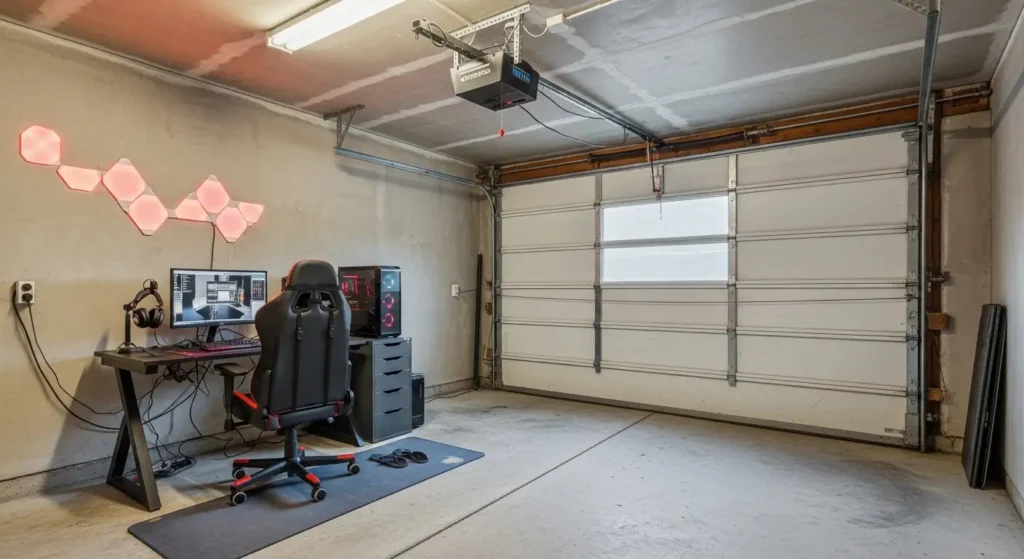
An old garage can become one of the best rooms in a home, but only if you treat it as a real renovation project instead of a weekend décor experiment. Too many gamer rooms fail because the owner buys lights, a big desk, and a chair before solving the parts that make garages unpleasant in the first place. Cold concrete, bad airflow, weak wiring, outside noise, dust, damp, and poor lighting will ruin even the most expensive setup. A proper gamer cave starts behind the walls, under the floor, and above the ceiling line. The look comes later.
A garage also demands a different mindset from a spare bedroom. A bedroom already has climate control, finished walls, standard sockets, and a floor made for daily use. A garage often has none of that. It may have a thin metal door, a rough slab, exposed studs, weak ceiling insulation, and an electrical layout that was never meant for a high-end PC, large monitor array, console station, mini fridge, charging hub, sound system, and ambient lighting all running at once. If you skip those basics, the room may look good in photos but feel tiring after one hour inside.
The goal is not to build a childish themed room with random posters and glowing clutter. The goal is to create an adult retreat that feels intentional, comfortable, private, and immersive. That means controlling temperature, sound, light, seating, and layout so the room supports long sessions without feeling messy or cheap. A strong gamer cave should feel like a separate zone from the rest of the house, but it should also be practical enough to use every week, not just show off once.
Start with the Room You Have, Not the Room You Want
The first step is to assess the garage honestly. Check for water stains, cracks, mould smell, rust on metal parts, and signs that the floor sweats in humid weather. Look at the garage door and ask whether it leaks air around the edges. Check the ceiling for insulation. Notice whether the walls are unfinished or only partly finished. Look at where dust enters, where heat builds up, and where rainwater might seep in. This stage is not exciting, but it decides the success of everything that comes after.
The electrical setup deserves special attention. Many old garages have very few outlets, and some are placed in awkward spots. Others share circuits with outdoor tools, laundry equipment, or lights in other areas. A gamer cave can draw more power than people expect. A PC, monitors, speakers, console, charger stations, a router or extender, LEDs, AC unit, and fridge can push a weak setup too hard. If the garage wiring is old, unsafe, or limited, fix that before buying gear. More outlets at proper desk height will make the room cleaner and safer.
The room’s size also matters, but not in the obvious way. A small garage can still become an excellent cave if it is planned tightly. A larger garage can feel empty and uncomfortable if the layout is poor. Measure wall lengths, ceiling height, the depth of the room, and how far the garage door intrudes when opened. Measure the height under any ceiling tracks or beams. If you want a large desk, a sofa, or a second gaming zone, the numbers matter. Guessing creates layout mistakes that are expensive to fix.
Fade Haircut Guide: Styles, Trends, and How to Choose the Perfect Look
Decide What Kind of Gamer Cave You Are Actually Building
The next decision is identity. Not every gamer cave should look the same, because not every gamer uses a room the same way. Some people want a focused PC battlestation for competitive play. Some want a console lounge with a large display and deep seating. Some want a hybrid room for gaming, music, films, and occasional work. Others want a dark, almost cinematic bunker where every surface feels quiet and deliberate. The room should follow usage, not trends.
A performance-focused cave usually needs a desk-first layout, controlled lighting, strong ergonomics, and minimal distractions. A social cave needs more seating, wider walking space, better speaker placement, and a layout that lets other people see the main screen comfortably. A content creator’s cave needs space for cameras, microphones, background lighting, and storage for accessories. A retro gaming room may benefit from display shelving, framed art, and a second zone for old consoles or arcade hardware. Once you choose the core identity, many later decisions become easier.
Theme also matters, but adult rooms benefit from restraint. A dark tech style with charcoal walls, matte black details, wood accents, and subtle lighting often ages better than a room overloaded with branded posters and bright plastic objects. A cyberpunk look can work if it stays controlled, with a few strong colors and clean lines. A retro arcade theme works better when it is selective, with one or two statement items instead of a flood of nostalgia. The more disciplined the theme, the more expensive and finished the room feels.
Fix the Invisible Problems Before You Buy Anything Fun
Insulation is one of the most important upgrades in a garage conversion. Without it, the room will be too hot in summer, too cold in winter, and noisy all year. Start with the ceiling and external walls. If the garage door stays in place, insulate that as well, because it is often the weakest part of the room. Even a powerful air conditioner struggles if the room constantly leaks heat or cold through thin surfaces. Insulation is not glamorous, but it shapes comfort every single day.
Air sealing matters as much as insulation. Small gaps around the garage door, side door, windows, and wall penetrations let in dust, insects, outdoor noise, and temperature swings. Seal those points properly. If the garage smells like a garage after renovation, air leakage is often one of the reasons. A gamer cave should not feel like a storage area with nicer furniture. It should feel sealed, controlled, and separate from the street.
Floor treatment is another overlooked issue. Bare concrete is cold, hard, and dusty. It can also make the room feel unfinished no matter how much money you spend elsewhere. At minimum, seal the slab. Better options include vinyl planks, laminate with the right underlayment, or carpet tiles in selected zones. Flooring should be easy to clean and stable under heavy chairs and desks. If you add rugs, use them to reduce echo and define areas, not to hide basic floor problems.
Ventilation deserves planning too. A sealed room with strong electronics, body heat, and poor air movement becomes stale fast. If the garage has no proper airflow, add it. That may mean an exhaust solution, a mini-split system, a quiet fan setup, or some combination. The key is to keep air moving without creating constant noise. A room that looks great but feels stuffy after two hours will never become a favourite place to spend time.
Build Light in Layers, Not as a Gimmick
Lighting changes the mood of a gamer cave more than almost any decoration choice. The mistake is to rely only on RGB strips and call it atmosphere. That produces a room that looks dramatic in photos but feels tiring, flat, or childish in real use. Good lighting starts with a calm base layer. You need general room light that makes cleaning, setup changes, and everyday use easy. After that, add accent lighting that shapes the mood.
Ambient lighting should be soft and controlled. Wall washers, dimmable ceiling fixtures, hidden LED coves, or indirect floor lighting can all work. Accent lighting should guide the eye toward the desk, display wall, shelving, or architectural features. Task lighting should handle practical needs like the keyboard zone, repair area, or reading corner. When these layers work together, the room feels intentional. When they do not, it feels like a dark garage with glowing edges.
Color choice matters as well. Deep blues, muted amber, low red tones, soft violet, or clean white can all work depending on the room’s palette. The problem is not color itself, but excess. Too many shifting colors make the room feel restless. A mature gamer cave usually benefits from one dominant lighting color and one accent color, not five. Smart controls help here. You can create scenes for competitive play, late-night sessions, film watching, or social use without changing hardware each time.
Screen glare should stay in mind from the start. Lights behind monitors can reduce eye strain, but bright fixtures facing a screen create reflection problems. The desk should not sit under a harsh direct beam. Large glossy displays will punish careless placement. Test the room from the chair, not from the doorway. Many lighting decisions look fine standing up and fail once you sit in the actual gaming position.
The Main Setup Should Serve Your Body, Not Just Your Gear
The desk area is the heart of the room, so comfort and proportions matter. Start with the main display plan. A single ultrawide, a multi-monitor setup, or a large TV each changes desk depth, viewing distance, speaker placement, and wall treatment. Build around the main screen choice instead of treating it like a last-minute item. An oversized screen in a shallow space feels oppressive. A small monitor on a huge blank wall feels underpowered.
Desk choice should follow how you play. Competitive mouse-and-keyboard gaming benefits from generous surface width and enough depth for comfortable monitor placement. Controller-focused use may allow more freedom, but cable routing and arm support still matter. Standing desks can work well in gamer caves, especially for hybrid work-and-play setups, but only if the cable management is planned cleanly from the start. A fixed desk is simpler, but it should still fit the body correctly.
Chair choice is even more important than desk choice. Many rooms spend heavily on display gear and settle for a chair with flashy styling but weak support. A gamer cave for adults should prioritise back support, seat comfort, arm adjustment, and durability over branding. Long sessions punish bad chairs. The room may be themed around escape and entertainment, but the body still notices pressure points, poor lumbar support, and bad posture by the end of the week.
Cable management is part of the architecture. Loose wires, overloaded power strips, and visible adapters make even a premium room feel temporary. Route cables along planned paths, hide power bricks, label major connections, and leave service access where needed. Good cable management does not only improve appearance, it also reduces dust traps, accidental unplugging, and setup stress when you upgrade hardware later.
Sound Is What Makes the Room Feel Separate from the House
A garage has challenging acoustics. Concrete, drywall, glass, metal, and hard floors all reflect sound, which creates slap, echo, and harshness. That matters whether you use speakers, a headset, or both. Even voice chat sounds worse in a reflective room. A proper gamer cave should not sound like an empty storage box. It should feel controlled.
Acoustic treatment solves a different problem from soundproofing. Soundproofing tries to stop sound from leaving or entering the room. Acoustic treatment improves how sound behaves inside the room. Many people confuse the two and buy foam panels expecting miracles. In reality, you may need better sealing, insulated walls, heavier doors, and ceiling work if outside noise is serious. Inside the room, you may need panels, rugs, curtains, or furniture placement changes to reduce reflection.
Speaker users need especially careful planning. The distance between speakers, wall surfaces, and seating matters. Bass becomes muddy in untreated corners. Dialogue gets lost in echo. If you want cinematic sound, plan the room around it instead of squeezing speakers into leftover spaces. If you rely mostly on a headset, acoustic treatment still helps because your own voice and the general room feel improve when the space is less harsh.
Noise control from cooling systems is another sound issue. A loud portable AC can ruin the room faster than bad wall art. Choose climate equipment with noise in mind. A room designed for immersion should not produce a constant drone louder than the game’s quiet moments.
Temperature Control Decides Whether the Room Gets Used All Year
A gamer cave cannot be seasonal unless you accept that it will sit half-empty for months. Garages often swing between freezing and oven-like. Electronics suffer, comfort drops, and long sessions become unpleasant. A strong climate plan usually means proper insulation first, then active heating and cooling for the space. In many cases, a mini-split is the cleanest long-term option. Portable units can work, but they are often noisier and less elegant.
Humidity also matters. Too much moisture encourages mold, rust, and a stale smell. Too little can be uncomfortable in some climates. If the garage has had damp issues before, address them at the source before finishing the room. Covering moisture problems with paint and lighting is a classic mistake. The room may look transformed for a month and then start to smell wrong.
Air movement matters even when temperature seems fine. Gaming equipment generates heat close to the body. Add a closed room, long sessions, and soft furnishings, and stagnant air becomes obvious. Quiet ceiling fans or carefully placed circulation fans can help if they do not interfere with lighting or screen comfort. Fresh air and stable temperature make the room feel cleaner and more adult.
Storage and Order Are What Keep the Cave from Becoming a Junk Room
An adult gamer cave should handle clutter before clutter appears. Controllers, chargers, cables, headphones, handhelds, games, tools, batteries, and boxes all need homes. Without storage, the room becomes a pile of expensive objects. That is especially easy in a garage because people already associate it with overflow storage. The renovation should break that habit.
Use closed storage for the ugly but necessary items, routers, spare cables, manuals, cleaning tools, and maintenance gear. Use open display storage only for things worth seeing. A few curated shelves with collectibles, helmets, framed prints, or old consoles can add character. Too many objects flatten the room visually and make dust control harder. The display should be edited, not automatic.
Wall space is valuable. Slat walls, cabinets, floating shelves, and peg systems can help if they match the room’s style. Charging stations deserve a permanent place. A drawer or side cabinet with built-in charging keeps devices ready without making the room look like a repair bench. Even drink placement should be planned. A side table or integrated surface is better than balancing glasses near expensive hardware. In some mixed-use rooms, people even repurpose compact utility surfaces that were originally meant for workrooms or restaurant tables, because the size and durability fit the need surprisingly well.
Cleaning access should remain easy. Do not design a room that traps dust behind every panel and under every cabinet. Leave enough clearance for vacuuming, wiping, and occasional cable checks. A gamer cave that is easy to maintain stays attractive longer.
Add Identity Carefully So the Room Feels Personal, Not Borrowed
The best themed rooms feel specific to the owner. They are not clones of trending setup videos. That means choosing references that reflect actual taste, not internet pressure. One person may want a dark sci-fi cave with metal accents, smoked glass, and muted LEDs. Another may prefer warm wood, black walls, and subtle references to retro games, film scores, or racing culture. A room can still be clearly gaming-focused without shouting the point from every corner.
Wall art should support the tone of the room. Large framed prints, minimalist game maps, vintage cover art, or custom backlit pieces often work better than piles of small posters. Materials matter too. Matte finishes, textured panels, wood slats, metal trim, and fabric surfaces can make the room feel layered and adult. Plastic-heavy décor tends to cheapen the effect unless used very carefully.
Personal history can make the room stronger. A shelf with old handhelds, a display of favourite physical editions, a signed item, or even a few objects from music, sport, or travel can stop the room from feeling one-note. A gamer cave should show who the owner is outside games as well. That balance often makes the room more believable and more comfortable.
A Great Cave Feels Good Alone and Still Works with Other People
Many people design for solo use and later realise they want to share the room. Friends come over, a partner joins for films or co-op games, or the room doubles as a hangout spot. Even if solo use is the priority, think about how one or two extra people might fit. That could mean a bench along the wall, compact guest seating, a small sofa, or a second screen zone.
Traffic flow matters. The room should not force visitors to step around cables or squeeze behind the main chair. Keep a clear path from the entrance to seating and from seating to any storage or refreshment area. Small changes in furniture position can make the room feel far more open without increasing size.
If social use matters, think about sightlines. A huge display mounted too high or too close can be uncomfortable for guests. Speaker placement may also need adjustment so secondary seats do not get a poor mix. Social rooms benefit from a little less obsession with perfect solo geometry and a little more attention to shared comfort.
Spend Money Where the Room Will Feel It Every Day
Budget mistakes happen when people overspend on visible gear and underspend on everything the room actually depends on. Insulation, electrical work, flooring, climate control, and the chair often deserve more money than decorative extras. Good walls and comfortable seating improve every session. Cheap wall art and other glowing accessories do not.
DIY can save money if used in the right places. Painting, shelf installation, cable organisation, acoustic panel frames, and some desk builds can be done well by a careful owner. Electrical work, moisture repair, and major structural changes should be handled professionally when needed. A gamer cave is still part of a house. Cutting corners on safety is not part of the theme.
A phased approach often works best. First make the room dry, insulated, powered, and climate controlled. Then build the main setup. After that, add storage, acoustic improvements, and finally decorative identity pieces. This order prevents waste and helps the room evolve based on real use instead of early assumptions.
An old garage can become a serious gamer cave if the project respects the room’s weaknesses and builds from them. The best results come from treating comfort, power, sound, temperature, and layout as the foundation, then adding atmosphere with discipline. Done right, the room stops feeling like a former garage at all. It becomes a private zone with its own logic, its own mood, and a reason to stay a little longer every time you step inside.