
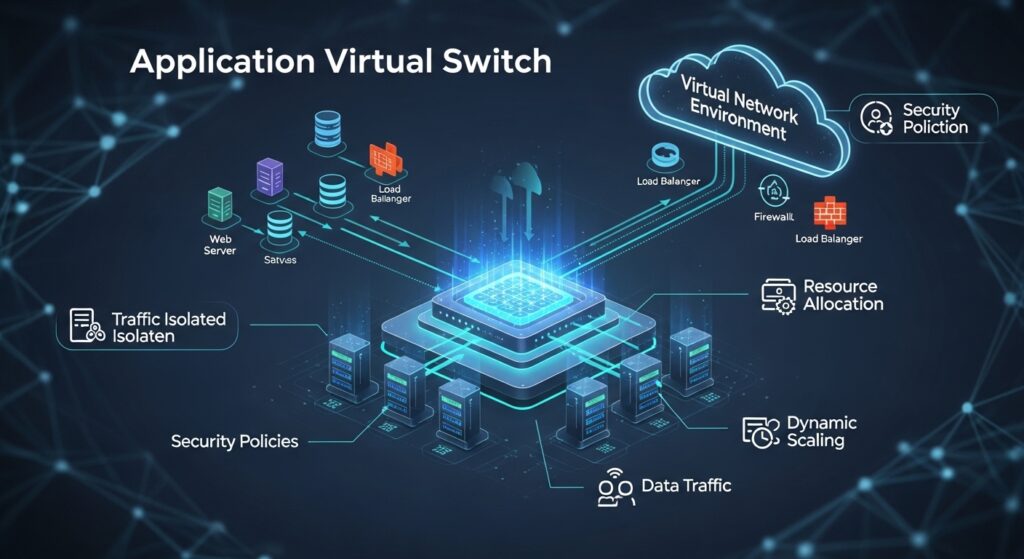
Modern computing environments rely heavily on virtualization technologies to improve efficiency, flexibility, and scalability. One important component in this digital infrastructure is the application virtual switch, which plays a key role in managing network communication within virtualized systems. As organizations adopt cloud computing, containerization, and virtual machines, network traffic must be managed effectively without relying entirely on physical hardware. A virtual switch provides a software based solution that allows applications and virtual systems to communicate smoothly. Understanding how an application virtual switch functions helps organizations design more efficient networks while maintaining performance, security, and adaptability in complex digital environments.
What an Application Virtual Switch Is
An application virtual switch is a software based network component that connects virtual machines or applications within a virtualized environment. Unlike traditional hardware switches that rely on physical connections, this technology operates within a host system or hypervisor. It directs network traffic between virtual systems in the same way a physical switch routes data between devices on a network. The application virtual switch allows multiple applications and virtual machines to communicate efficiently while sharing the same hardware resources. By using software defined networking principles, organizations can manage network configurations more easily and support dynamic workloads without extensive physical infrastructure changes.
How Virtual Networking Supports Modern Applications
The growth of cloud services and virtual environments has increased the demand for flexible networking solutions. An application virtual switch helps support modern applications by allowing communication between virtual machines, containers, and other digital services. Instead of relying on physical cables and switches, network traffic flows through software defined pathways. This flexibility allows developers and system administrators to create isolated environments for testing, deployment, and production. The ability to adjust network configurations quickly also helps organizations respond to changing demands. As applications scale or move between servers, the virtual switch ensures that connectivity remains stable and efficient.
Key Functions of an Application Virtual Switch
The application virtual switch performs several important functions that maintain smooth communication within virtual environments. It manages the routing of data packets between virtual machines and applications while ensuring that information reaches the correct destination. The switch can also support network segmentation, which allows administrators to create separate communication channels within the same infrastructure. This capability improves both performance and security by isolating different workloads. Additionally, an application virtual switch may include monitoring features that help administrators track traffic patterns and identify potential issues before they affect system performance.
Benefits for Cloud Computing Environments
Cloud computing platforms rely heavily on virtualization technologies, making the application virtual switch an essential component of cloud infrastructure. In cloud environments, multiple users and services share the same physical hardware, which requires efficient management of network traffic. A virtual switch helps maintain communication between virtual servers while preventing network congestion. It also allows cloud providers to create isolated networks for different customers, ensuring privacy and security. Because the switch operates through software, administrators can update configurations quickly without modifying physical hardware. This flexibility supports the dynamic nature of cloud services and scalable application deployment.
Improving Network Efficiency and Performance
Network efficiency is critical for organizations that rely on digital applications and online services. An application virtual switch contributes to improved performance by managing internal network traffic more effectively. When applications communicate within the same virtual environment, the switch allows data to move directly between systems without passing through external hardware. This process reduces latency and speeds up communication between services. By handling traffic at the software level, the switch can optimize routing paths and distribute network loads more evenly. These improvements help maintain consistent performance even when multiple applications operate simultaneously within the same environment.
Security Advantages of Virtual Network Switching
Security is a major concern in virtualized environments where multiple systems operate on shared hardware. The application virtual switch provides several security advantages by supporting network isolation and monitoring capabilities. Administrators can create separate virtual networks that prevent unauthorized communication between applications or services. This segmentation reduces the risk of data exposure and helps protect sensitive workloads. Many virtual switches also support traffic inspection and policy enforcement features. These capabilities allow organizations to monitor network activity and detect suspicious behavior. By integrating security controls directly into the virtual network layer, administrators strengthen overall infrastructure protection.
Integration with Virtual Machines and Containers
Modern software development frequently uses virtual machines and containers to run applications in isolated environments. The application virtual switch connects these systems so they can communicate efficiently without compromising isolation. When developers deploy multiple containers or virtual machines on the same host server, the virtual switch acts as the central connection point. Each application can send and receive data through the switch while maintaining its own network configuration. This integration ensures that distributed applications operate smoothly. It also supports microservices architecture, where different components of a system interact through network communication managed by the virtual switch.
Management and Configuration Flexibility
One of the most significant advantages of an application virtual switch is the flexibility it offers for network management. Administrators can configure network settings through software interfaces rather than physical equipment. This approach simplifies tasks such as creating new networks, adjusting routing rules, or isolating specific applications. Because the switch operates within the virtual environment, updates and modifications can be applied quickly without interrupting hardware connections. The ability to automate configuration changes also supports large scale infrastructures where manual network adjustments would be time consuming. This flexibility makes virtual switches highly valuable for organizations managing complex digital systems.
The Future of Virtual Networking Technology
Virtual networking technologies continue to evolve as organizations expand their digital infrastructure. The application virtual switch is expected to remain a key component in this transformation because it enables efficient communication within software defined environments. Future advancements may include improved automation, stronger security controls, and deeper integration with artificial intelligence systems that analyze network behavior. These innovations could help organizations predict network issues before they occur and optimize performance automatically. As cloud computing, edge computing, and distributed applications grow, virtual switching technology will play an increasingly important role in supporting scalable and resilient network architectures.
Conclusion
Digital transformation has reshaped how organizations build and manage their network infrastructure. The application virtual switch represents a powerful solution that allows virtual machines and applications to communicate efficiently without relying entirely on physical networking hardware. By providing flexibility, improved performance, and enhanced security, this technology supports the complex environments required for cloud computing and modern software development. As virtual systems continue to expand, the importance of software defined networking will only increase. Understanding the role of the application virtual switch helps businesses and technology professionals design networks that remain adaptable, reliable, and ready for future innovation.