
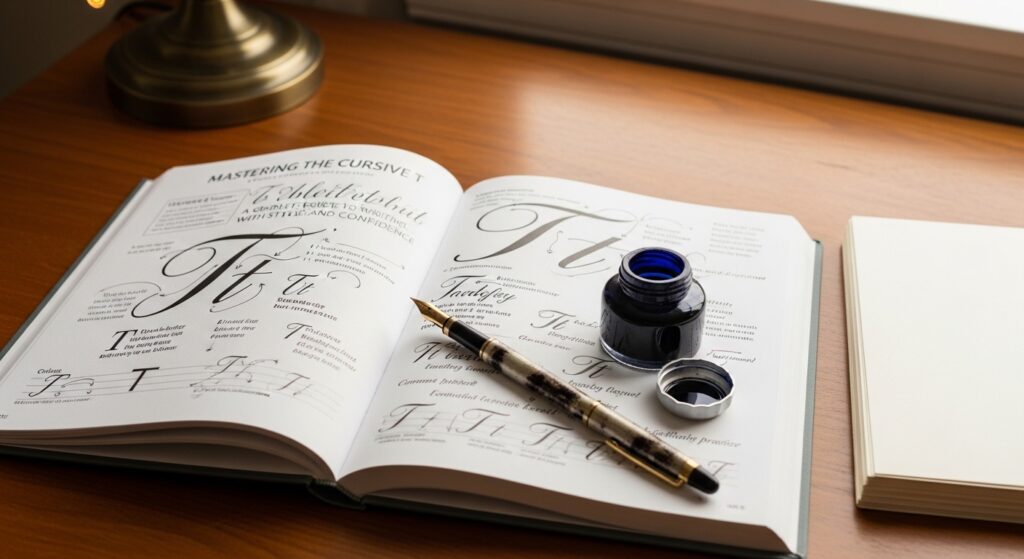
Handwriting remains an essential skill, even in a digital world dominated by keyboards and touchscreens. Among all letters in the alphabet, the cursive t often stands out as one of the most distinctive and sometimes challenging to master. Its elegant curves and connecting strokes add flow and personality to written words. Whether you are a student learning cursive writing or an adult refining your penmanship, understanding how to form the cursive t correctly can improve both clarity and style. Its structure, techniques, variations, and practical importance in everyday writing.
Understanding the Structure of the Cursive T
The cursive t has a unique structure that differs from its printed form. Instead of straight vertical and horizontal lines, it is formed using smooth, continuous strokes. Typically, the lowercase cursive t begins with a light upward curve, followed by a downstroke that slightly loops or curves at the bottom. It is then crossed with a gentle horizontal line. The uppercase cursive t may include decorative loops depending on the handwriting style. Understanding these structural elements helps writers create a balanced and readable letter that blends naturally with other cursive characters.
Why the Cursive T Is Important in Handwriting
The cursive t plays a significant role in maintaining rhythm and consistency within cursive writing. Since the letter appears frequently in English words, mastering it improves overall handwriting fluency. A well-formed cursive t ensures smooth connections between letters, preventing awkward breaks in words. When written correctly, it enhances legibility without sacrificing elegance. Poorly formed letters can make handwriting difficult to read, especially in formal documents or academic settings. Focusing on proper technique allows writers to maintain clarity while preserving the aesthetic qualities that make cursive writing distinctive and expressive.
Step by Step Technique for Writing the Cursive T
Writing the cursive t effectively begins with correct hand positioning and steady movement. Start slightly above the baseline and draw a small upward curve. Transition into a downward stroke that gently curves at the bottom before returning to the baseline. Lift the pen briefly to add a horizontal crossbar at the midpoint. Maintaining even pressure ensures smooth lines and balanced proportions. Practicing slowly at first allows muscle memory to develop naturally. Over time, speed can increase without compromising neatness. Consistent repetition builds confidence and results in a clean, well-proportioned cursive t.
Common Mistakes and How to Avoid Them
Many learners struggle with the cursive t because of incorrect proportions or inconsistent crossbars. One common mistake is placing the horizontal line too high or too low, which disrupts uniformity. Another issue is making the downstroke too straight, removing the natural flow characteristic of cursive writing. Overly large loops can also make the letter appear exaggerated. To avoid these problems, writers should focus on maintaining consistent letter height and spacing. Regular practice using lined paper helps reinforce alignment. Paying attention to detail ensures the cursive t blends smoothly within complete words.
Variations of the Cursive T in Different Styles
The appearance of the cursive t can vary depending on regional handwriting styles and personal preferences. In some traditional scripts, the letter includes a slight loop at the bottom, while modern styles may favor a simpler design. Calligraphy often features a more decorative uppercase cursive t with extended flourishes. These stylistic variations demonstrate the flexibility of cursive writing. Although the basic structure remains consistent, individual expression can influence the final appearance. Understanding different forms allows writers to choose a style that feels comfortable while maintaining readability and proper letter formation.
Teaching Children to Write the Cursive T
Introducing children to the cursive t requires patience and structured guidance. Teachers often begin with basic stroke exercises before focusing on full letter formation. Demonstrating each step clearly helps young learners visualize the process. Encouraging slow, deliberate practice strengthens fine motor skills and coordination. Positive reinforcement builds confidence and reduces frustration. Using engaging activities such as tracing exercises or creative writing tasks keeps students motivated. By practicing consistently, children gradually develop smoother handwriting. Mastering the cursive t early provides a strong foundation for developing overall cursive fluency and neat penmanship.
The Role of the Cursive T in Calligraphy
In calligraphy, the cursive t becomes more than a simple letter; it transforms into an artistic element. Skilled calligraphers adjust stroke thickness, angle, and spacing to create visually appealing designs. The crossbar can be extended or stylized to enhance decorative compositions. Because calligraphy emphasizes precision and balance, careful attention to the proportions of the cursive t is essential. This letter often serves as a focal point within elegant scripts. Practicing calligraphy techniques improves control and creativity. As a result, the cursive t can elevate the overall aesthetic of handwritten invitations, certificates, and artwork.
Practicing the Cursive T for Better Penmanship
Improving penmanship requires consistent and mindful practice. Setting aside time each day to focus on letters such as the cursive t can significantly enhance writing quality. Using guide sheets helps maintain consistent height and alignment. Writers should concentrate on smooth transitions between letters to preserve flow. Gradual improvement becomes noticeable with repetition and attention to detail. Practicing complete words containing multiple instances of the cursive reinforces muscle memory. Over time, handwriting becomes more natural and fluid. Commitment to regular practice ultimately strengthens confidence and produces polished, legible cursive writing.
Benefits of Maintaining Cursive Writing Skills
Despite the prevalence of digital communication, cursive writing offers cognitive and practical benefits. Writing letters such as the cursive by hand engages fine motor skills and strengthens memory retention. Studies suggest that handwriting can improve concentration and learning outcomes. Additionally, cursive writing allows for personal expression and unique style. Many official signatures still rely on cursive forms, making familiarity with the script valuable. Preserving this skill supports creativity and communication beyond digital devices. By mastering elements like the cursive, individuals maintain a timeless and meaningful form of written expression.
Conclusion
The cursive is a small yet significant component of elegant handwriting. Its structure, technique, and variations contribute to overall writing fluency and visual appeal. Whether learned in childhood or refined in adulthood, mastering the cursive enhances clarity and confidence. Through regular practice and attention to detail, writers can develop a balanced and attractive cursive style that remains relevant in both personal and professional contexts.