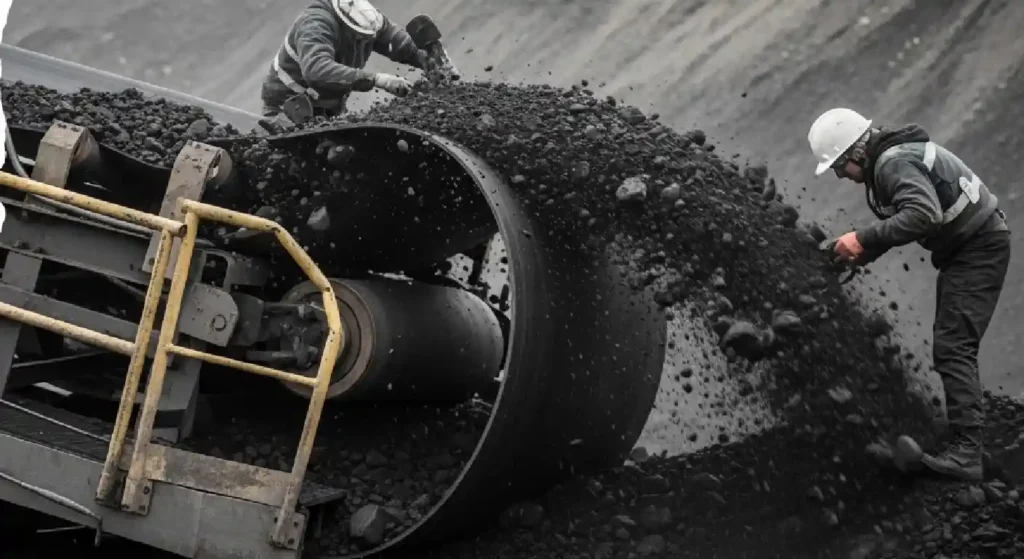
In 2018, a coal mine in Wyoming experienced catastrophic conveyor failure when 800-PIW belt carried loads requiring 1,200-PIW rating. Result: belt rupture at 2,200-foot elevation, 340 tons material spillage, $1.8M damage, 23-day production halt, two injuries from flying debris. Root cause analysis revealed procurement team selected belt based on width matching existing system without verifying PIW of the Belt requirements for increased tonnage demands.
This incident exemplifies why understanding PIW (Pounds per Inch of Width)—conveyor belt’s longitudinal tensile strength rating—determines system safety, efficiency, and reliability. This guide uses February 2026 industry data, CEMA standards, and calculation frameworks enabling proper belt specification for material handling applications.
What is PIW: Technical Definition
PIW (Pounds per Inch of Width) measures conveyor belt’s tensile breaking strength in longitudinal direction per inch of belt width. Expressed in lb/in or PIW units, it quantifies maximum load belt withstands before fabric/cord failure.
Example: 36-inch wide belt rated 500 PIW has total breaking strength = 36 inches × 500 PIW = 18,000 pounds longitudinal tension capacity.
Critical distinction – PIW vs Total Breaking Strength:
- PIW: Strength per inch (rating allows width-independent comparison)
- Total Breaking Strength: PIW × Belt Width (actual system capacity)
Standardized PIW ratings (DIN 22102, ISO 283): 150, 250, 315, 400, 500, 630, 800, 1000, 1250, 1600, 2000, 2500, 3150, 4000, 4500, 5400 PIW (incremental standards enabling precise specification).
PIW Rating by Belt Carcass Type
| Carcass Type | PIW Range | Construction | Applications | Elongation at Break |
|---|---|---|---|---|
| EP (Polyester-Polyamide) | 150-1600 PIW | Polyester warp + nylon weft fabric plies | General conveying, moderate loads | 2-3% |
| NN (Nylon-Nylon) | 150-1250 PIW | Nylon warp + nylon weft fabric plies | Impact resistance, flexibility needed | 4-5% (higher elongation) |
| Cotton/Rayon | 150-500 PIW | Natural fiber fabric (obsolete) | Legacy systems only | 6-8% |
| Steel Cord | 630-5400+ PIW | Longitudinal steel cables embedded | Long-distance, high-capacity mining | <0.2% (minimal elongation) |
| Aramid Cord | 800-2500 PIW | Kevlar/Twaron synthetic cords | High-strength, lightweight applications | 1-2% |
EP advantages: Lower cost, good strength-to-weight ratio, balanced elongation (2-3% prevents excessive sag while absorbing shock loads).
Steel cord advantages: Highest PIW ratings (5400+ achievable), minimal elongation (<0.2% enables long conveyors 10+ km), excellent splice strength (90-95% efficiency vs 85-90% fabric).
Rice Bowl of India: Exploring the Agricultural Heartland of the Nation
How PIW Affects Conveyor System Performance
1. Load Capacity and Material Tonnage
Effective tension (Te) determines required PIW. CEMA B105.1 formula:
Te = Load tension + Belt weight tension + Friction losses + Vertical lift tension
Safety factor application: Actual belt PIW must exceed calculated effective tension by safety margin:
- General industrial: 6:1 minimum (CEMA standard)
- Mining/heavy duty: 7:1 to 10:1
- Steel cord belts: 5:1 acceptable (higher splice efficiency)
Example calculation:
- Material load: 500 TPH (tons per hour) coal
- Belt speed: 500 FPM (feet per minute)
- Belt width: 48 inches
- Conveyor length: 3,000 feet, 15° incline
- Calculated effective tension (Te): 24,000 lbs
- Required total breaking strength: 24,000 × 8 (safety factor) = 192,000 lbs
- Required PIW: 192,000 ÷ 48 inches = 4,000 PIW
Solution: Specify EP 1600 PIW × 4-ply (6,400 PIW total) or steel cord 4000-4500 PIW belt.
2. Belt Longevity and Operating Stress
Belt life correlation to operating tension:
- Operating at 50% rated PIW: Expected life 5-8 years typical applications
- Operating at 70% rated PIW: Expected life 3-5 years (increased fatigue)
- Operating at 85%+ rated PIW: Expected life 1-3 years (high stress accelerates carcass fatigue)
Elongation impact: Belts stretched beyond elastic limit (permanent elongation >1-2%) require frequent take-up adjustment, causing uneven loading and premature failure.
3. Energy Efficiency and Drive Power
Relationship: Higher operating tension requires greater drive power overcoming belt resistance.
Power calculation (HP) = (Te × Belt Speed) ÷ 33,000
Example: 24,000 lb effective tension at 500 FPM = (24,000 × 500) ÷ 33,000 = 364 HP required.
Efficiency optimization: Selecting belt with adequate PIW (avoiding over-tensioning) minimizes friction losses, reducing energy consumption 8-15% vs undersized belt operating at maximum capacity.
4. Safety Considerations and Failure Modes
Catastrophic failure risks:
- Belt rupture: Sudden tensile failure releasing stored energy (whiplash effect dangerous to personnel)
- Splice failure: Weak point typically 85-95% belt strength—inadequate PIW creates splice stress concentration
- Pulley damage: Over-tensioned belt damages bearings, shafts, drive components
MSHA (Mine Safety and Health Administration) requirements: Underground mining conveyors require documented PIW calculations, regular tension monitoring, splice inspection protocols.
PIW Selection by Industry Application
| Industry | Typical PIW Range | Material Transported | Belt Width | Specific Challenges |
|---|---|---|---|---|
| Mining (underground) | 1000-3150 PIW | Coal, ore, aggregate | 30-72″ | Impact loads, long distances |
| Mining (surface/quarry) | 630-2000 PIW | Rock, overburden | 36-60″ | Abrasion, high capacity |
| Cement plants | 500-1600 PIW | Clinker, raw materials | 24-48″ | High temperature (200°C+) |
| Steel mills | 800-2500 PIW | Scrap, billets, sinter | 36-72″ | Heat resistance, heavy impact |
| Ports/terminals | 1000-2500 PIW | Coal, grain, containers | 48-84″ | Long distance (2-5 km), weather exposure |
| Aggregate processing | 400-1250 PIW | Sand, gravel, crushed stone | 24-48″ | Moderate loads, impact resistance |
| Food processing | 150-500 PIW | Grain, packaged goods | 18-36″ | Sanitation requirements, low elongation |
Belt Carcass Construction and Ply Rating
Ply configuration determines total PIW. Each fabric ply contributes incremental strength:
Example – EP 400 PIW Belt:
- 2-ply: 400 × 2 = 800 PIW total
- 3-ply: 400 × 3 = 1,200 PIW total
- 4-ply: 400 × 4 = 1,600 PIW total
- 5-ply: 400 × 5 = 2,000 PIW total
Ply selection trade-offs:
- More plies: Higher PIW, better impact resistance, increased thickness/weight
- Fewer plies: Lower cost, better flexibility (troughability), reduced pulley size requirements
Troughability consideration: Higher ply-count belts require larger idler diameters preventing carcass damage through excessive bending.
Splice Efficiency and Joint Strength
Splice types and PIW retention:
- Vulcanized hot splice: 85-95% PIW retention (fabric), 90-95% (steel cord)—preferred permanent jointing
- Mechanical fasteners: 60-75% PIW retention—temporary or emergency repairs only
- Cold bonded splice: 75-85% PIW retention—limited applications
Critical insight: Splice represents belt’s weakest point—effective system PIW limited by splice strength, not nominal belt PIW.
Maintenance Practices Preserving PIW Capacity
Inspection protocols:
- Visual examination: Check for cord exposure, fabric separation, cover wear (quarterly minimum)
- Elongation monitoring: Measure take-up position tracking permanent stretch (monthly)
- Splice inspection: Ultrasonic testing detecting internal separation (annually or per MSHA requirements)
Tension management:
- Maintain take-up within manufacturer specifications (prevents over-tensioning damaging carcass)
- Monitor belt sag between idlers (excessive sag indicates insufficient tension; minimal sag indicates over-tensioning)
Alignment correction: Mistracking concentrates edge stress reducing effective PIW by creating uneven loading.
CEMA Standards and PIW Specification
CEMA (Conveyor Equipment Manufacturers Association) B105.1 provides standardized methodology for:
- Effective tension calculation
- Safety factor determination
- Belt rating selection
- Splice design requirements
DIN 22102 (European standard): Specifies tensile strength testing methodology, elongation limits, splice efficiency requirements.
ISO 283: International standard defining textile conveyor belt strength ratings, test procedures, quality requirements.
Working with Trusted Suppliers
Selecting a Heavy Duty Conveyor Belt Manufacturer – Rentone Belt ensures access to belts with verified PIW ratings, engineered for your application, with expert guidance on width, tensioning, and environmental considerations. Working with a reliable supplier mitigates risk, enhances system efficiency, and extends belt lifespan.
FAQs: PIW Conveyor Belt Selection
What does PIW stand for in conveyor belts?
PIW = Pounds per Inch of Width; measures belt’s longitudinal tensile strength per inch.
How do you calculate required PIW for conveyor belt?
Required PIW = (Effective tension × Safety factor) ÷ Belt width, accounting for splice efficiency.
What is a good PIW rating for conveyor belts?
Light-duty: 150–400 PIW; industrial: 400–800 PIW; heavy mining: 800–5400+ PIW.
What is difference between fabric and steel cord PIW?
Fabric: 150–1600 PIW, flexible, short-distance; Steel cord: 630–5400+ PIW, minimal elongation, long-distance.
Does belt width affect PIW rating?
No; PIW is per inch. Width affects total load capacity only.
How does PIW affect belt lifespan?
Operating near rated PIW shortens lifespan; safety factor 6–10× maximizes durability.
Strategic PIW Selection for Conveyor Reliability
PIW of the Belt determines conveyor system’s fundamental capacity, safety margin, longevity, and operational efficiency. Proper specification requires calculating effective tension (material load + belt weight + friction + lift), applying appropriate safety factors (6-10:1 by industry), and selecting standardized PIW rating (150-5400 range) matching application demands.
Understanding PIW relationship to belt carcass type (EP fabric vs steel cord), ply configuration, splice efficiency (85-95%), and CEMA/DIN/ISO standards enables informed selection preventing catastrophic failure, minimizing energy consumption, and maximizing belt service life.
What conveyor belt PIW selection challenge is preventing confident specification—effective tension calculation uncertainty, safety factor determination, carcass type selection, or splice strength considerations?