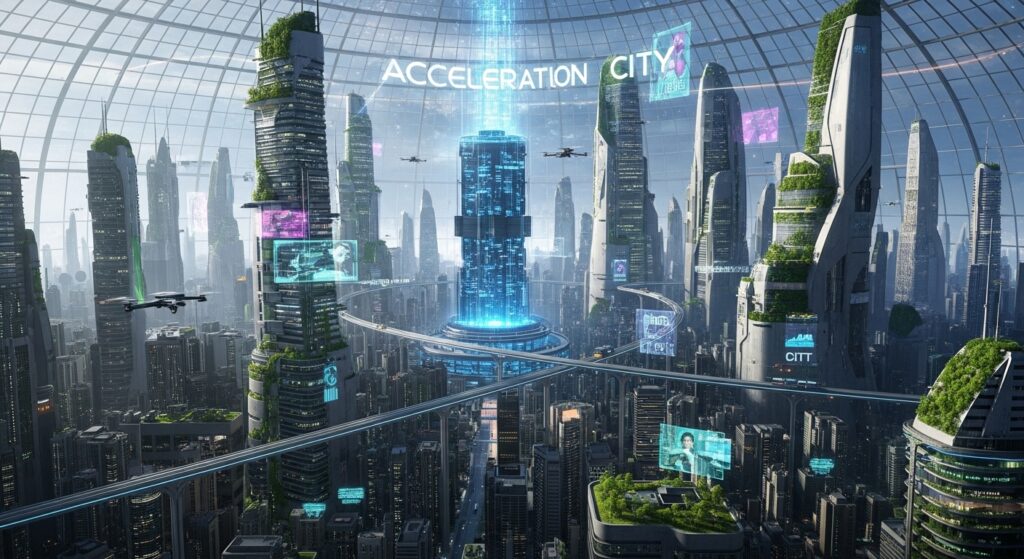
Urban centers around the world are evolving at unprecedented speeds, and the concept of Acceleration City represents the next stage of this transformation. Combining technology, sustainability, and smart infrastructure, Acceleration City embodies a vision of urban life that is efficient, connected, and dynamic. Cities adopting this model focus on rapid innovation while maintaining quality of life for residents. From smart transportation networks to digital governance, Acceleration City showcases how rapid development can coexist with environmental consciousness and social inclusivity. Understanding its features and implications provides insight into the future of modern urban living.
The Concept of Acceleration City
Acceleration City refers to an urban model designed to embrace rapid technological and infrastructural growth while prioritizing citizen needs. Unlike traditional cities, it integrates smart technologies in transportation, energy management, communication, and governance. The goal is to create responsive, adaptable environments that anticipate challenges and provide seamless solutions. Accelerated development in such cities is guided by data driven insights and predictive analytics. Residents experience faster services, improved connectivity, and optimized urban functions. This model aims to balance speed of innovation with sustainability, offering a blueprint for cities looking to remain competitive and livable in the 21st century.
Smart Infrastructure and Connectivity
One of the defining features of Acceleration City is its smart infrastructure. Roads, bridges, and public facilities are equipped with sensors and real time monitoring systems to improve safety and efficiency. High speed internet and integrated digital networks connect public services, transportation, and residential areas. Intelligent lighting, automated traffic management, and predictive maintenance reduce operational costs while enhancing quality of life. Connectivity extends to both people and devices, allowing seamless communication between urban systems. By prioritizing infrastructure intelligence, Acceleration City ensures that the urban environment adapts quickly to changing conditions, supporting both residents and businesses.
Transportation Innovations
Transportation plays a central role in the vision of Acceleration City. Autonomous vehicles, smart traffic signals, and electric public transport systems reduce congestion and environmental impact. Mobility as a Service platforms integrate ride sharing, bike sharing, and public transport schedules to offer flexible travel options. Real time traffic analytics enable commuters to make informed decisions, while logistics networks operate with optimized efficiency. These innovations not only reduce commute times but also contribute to sustainability goals. Acceleration City demonstrates how smart transportation can transform urban mobility, creating cities that are cleaner, faster, and more accessible for all residents.
Sustainable Energy Management
Energy sustainability is a key component of Acceleration City. Renewable energy sources, such as solar and wind, are integrated into the urban power grid. Smart energy meters, grid management systems, and energy storage solutions ensure efficient usage and reduce waste. Buildings are designed for energy efficiency, with automated heating, cooling, and lighting systems. By combining technology with environmental responsibility, Acceleration City addresses climate change while supporting urban growth. Energy sustainability also fosters resilience, ensuring that cities can maintain essential services during peak demand or emergencies. This approach sets a benchmark for modern, eco conscious urban planning.
Digital Governance and Public Services
Acceleration City leverages digital tools to enhance governance and public service delivery. E government platforms allow citizens to access information, submit requests, and participate in decision making online. Data driven analytics improve resource allocation, urban planning, and emergency response. Transparency and accountability are strengthened through real time reporting and monitoring systems. Digital governance reduces bureaucracy, speeds up administrative processes, and encourages civic engagement. By integrating technology into government functions, Acceleration City fosters a responsive and participatory urban environment, empowering residents and improving overall quality of life.
Economic Growth and Innovation Hubs
A vital aspect of Acceleration City is its support for economic development and innovation. Technology parks, startup incubators, and research centers provide opportunities for entrepreneurship and job creation. Collaborative workspaces foster creativity, skill development, and knowledge sharing. Businesses benefit from advanced infrastructure, digital connectivity, and efficient logistics systems. By nurturing innovation, Acceleration City attracts talent and investment while supporting local economic resilience. This ecosystem encourages continuous technological advancement, ensuring the city remains competitive in global markets and becomes a hub for forward thinking industries.
Social Inclusivity and Quality of Life
While technology drives Acceleration City, social inclusivity remains a central focus. Urban planning incorporates affordable housing, accessible healthcare, education, and public spaces. Smart systems are designed to serve all residents, including vulnerable populations. Community programs, cultural activities, and green spaces promote well being and social cohesion. By integrating inclusivity with rapid urban development, Acceleration City demonstrates that technological progress and human centered design can coexist. Residents benefit from improved safety, mobility, and access to essential services, creating a balanced urban environment that fosters both growth and equity.
Environmental and Climate Resilience
Acceleration City prioritizes environmental resilience to address climate related challenges. Green infrastructure, sustainable construction practices, and efficient waste management reduce ecological impact. Water recycling systems, urban forestry, and pollution monitoring improve environmental quality. Climate resilient planning ensures cities can adapt to extreme weather events, sea level rise, and other environmental pressures. By embedding sustainability into rapid development, Acceleration City models how urban growth can coexist with ecological preservation. This proactive approach enhances long term livability, ensuring that accelerated urbanization does not compromise the natural environment or the health of its residents.
Future Prospects of Acceleration Cities
As urban populations continue to rise, Acceleration City offers a blueprint for managing growth intelligently and sustainably. Advances in artificial intelligence, IoT, and data analytics will further enhance city responsiveness. Collaborative governance models and innovative infrastructure will define the next generation of urban environments. Global cities adopting this framework will set new standards for efficiency, sustainability, and quality of life. The ongoing evolution of Acceleration City demonstrates that rapid development can coexist with human centered planning, positioning it as a leading vision for the future of urban living worldwide.
Conclusion
Acceleration represents a transformative approach to modern urban life, combining technology, sustainability, and social inclusivity. Its focus on smart infrastructure, efficient transportation, renewable energy, and digital governance enhances both productivity and quality of life. By supporting innovation, economic growth, and climate resilience, Acceleration City offers a comprehensive framework for the cities of tomorrow. As urbanization accelerates globally, adopting this model ensures that growth is intelligent, sustainable, and people focused, creating dynamic cities capable of thriving in the rapidly changing 21st century.